
Lock and Door Hardware Repairs
Snapped keys, stubborn deadbolts, sagging handles and latches that miss the strike, repaired at the door.
Locks tend to warn before they fail: a key starts to drag, a deadbolt turns only with the door pulled tight, and then one morning the key snaps. Many of these faults can be repaired on site without replacing the whole lock, which is why every repair starts by finding out what the lock is actually doing.
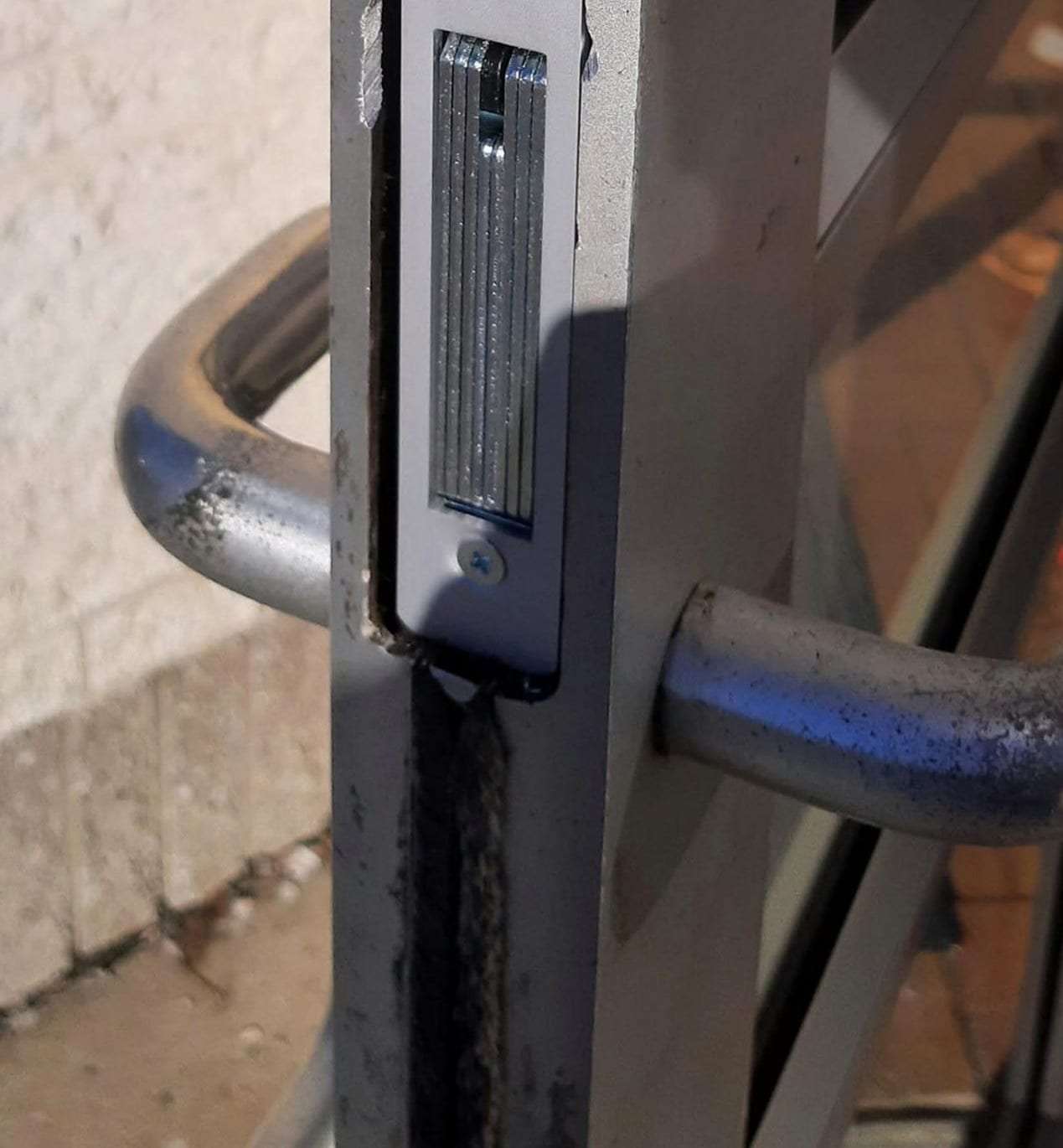
Lock Faults and How They Are Fixed
Each fault has its own signs, and the repair follows the cause rather than the symptom.
| Problem | Typical Sign | What the Repair Involves | Applies To |
|---|---|---|---|
| Key broken off in lock | The tip of the key stays in the keyway | Extracting the piece, checking the pins, cutting a new key if there is no spare | Any keyed lock, including cars |
| Deadbolt that will not throw | The bolt stops short or moves only with the door pushed tight | Realigning the strike, or repairing a bolt that has failed inside | Home entry doors, shop back doors |
| Lock that sticks or turns hard | The key goes in stiffly, needs jiggling, or turns only with force | Cleaning out grit and old grease, lubricating the pins, checking the key for wear | Keyed cylinders indoors and out |
| Loose or sagging handle | A knob or lever that wobbles, droops or does not spring back | Tightening or replacing the screws and spindle, or renewing a worn spring | Knobs, levers and handlesets |
| Worn or damaged cylinder | Keys catch or work only at an angle; the face is scarred | Repinning or replacing the cylinder alone, leaving the rest of the lock | Deadbolts, mortise locks and rim locks |
| Damaged strike plate or door frame after a forced entry | A split jamb, a torn-out strike, a door that will not latch | Repairing the jamb and fitting a heavier strike on long screws | Entry doors on homes and businesses |
| Misaligned latch | The door has to be pushed, lifted or slammed to latch | Moving the strike, or tightening the hinges so the latch meets it | Doors that have settled or swollen |
| Car ignition or door lock fault | The key sticks or will not turn in the ignition or door | Checking key and cylinder, then repairing it or cutting a new key | Cars, depending on make, model and year |
Spare and transponder keys for the car itself are covered under car keys.
Settled Rowhouse Doors and Frames
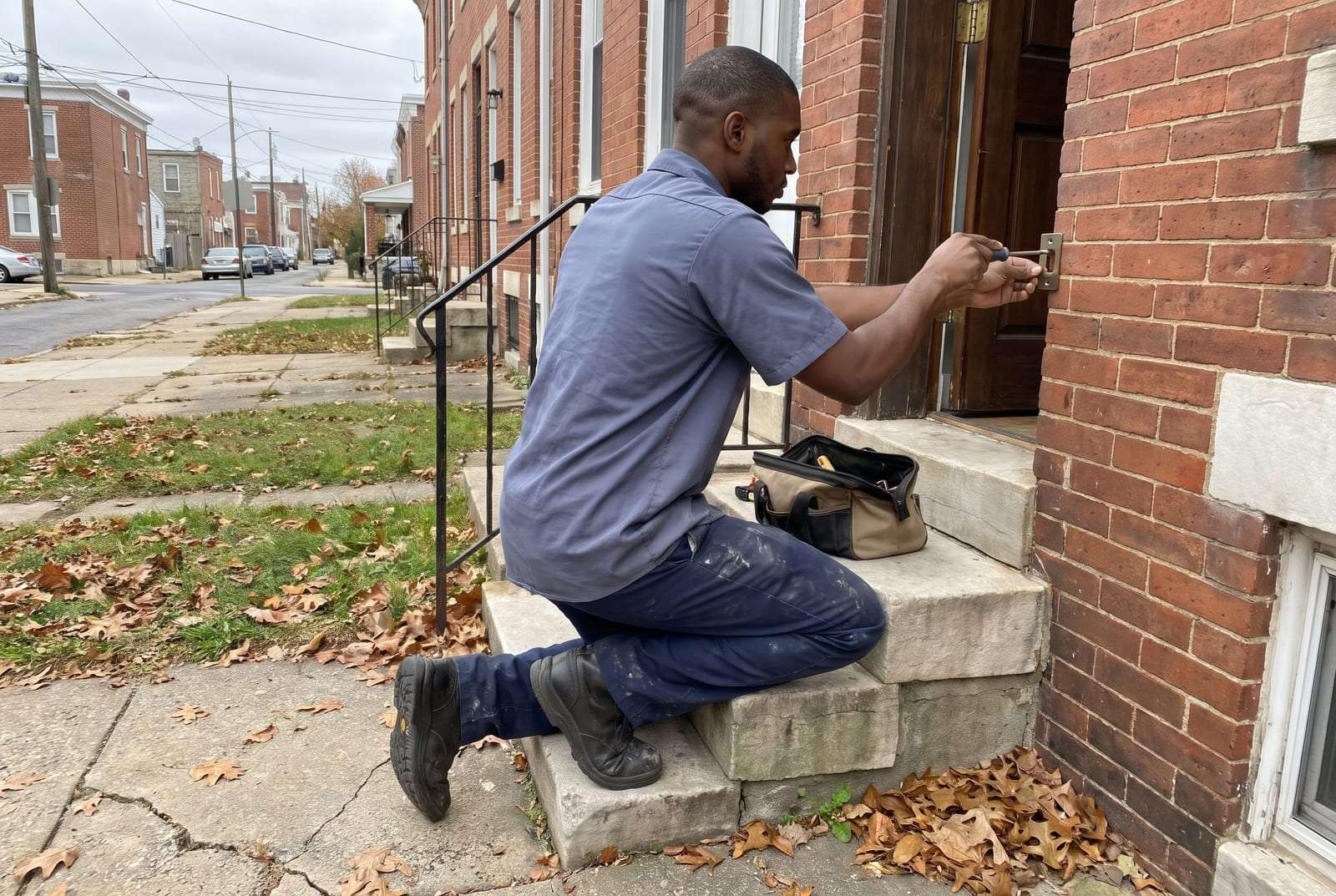
Many of Philadelphia’s rowhouses have stood for a century or more, and their doors have moved with them. As a frame settles out of square, the latch and deadbolt drift off the strike, and the door needs a shove before it will lock. The lock takes the blame, but the cure is often a strike moved a fraction of an inch, or longer hinge screws biting into solid framing. A house with a vestibule has two such doors, and each can drift on its own.
Dirt and Rust Inside a Sticking Lock
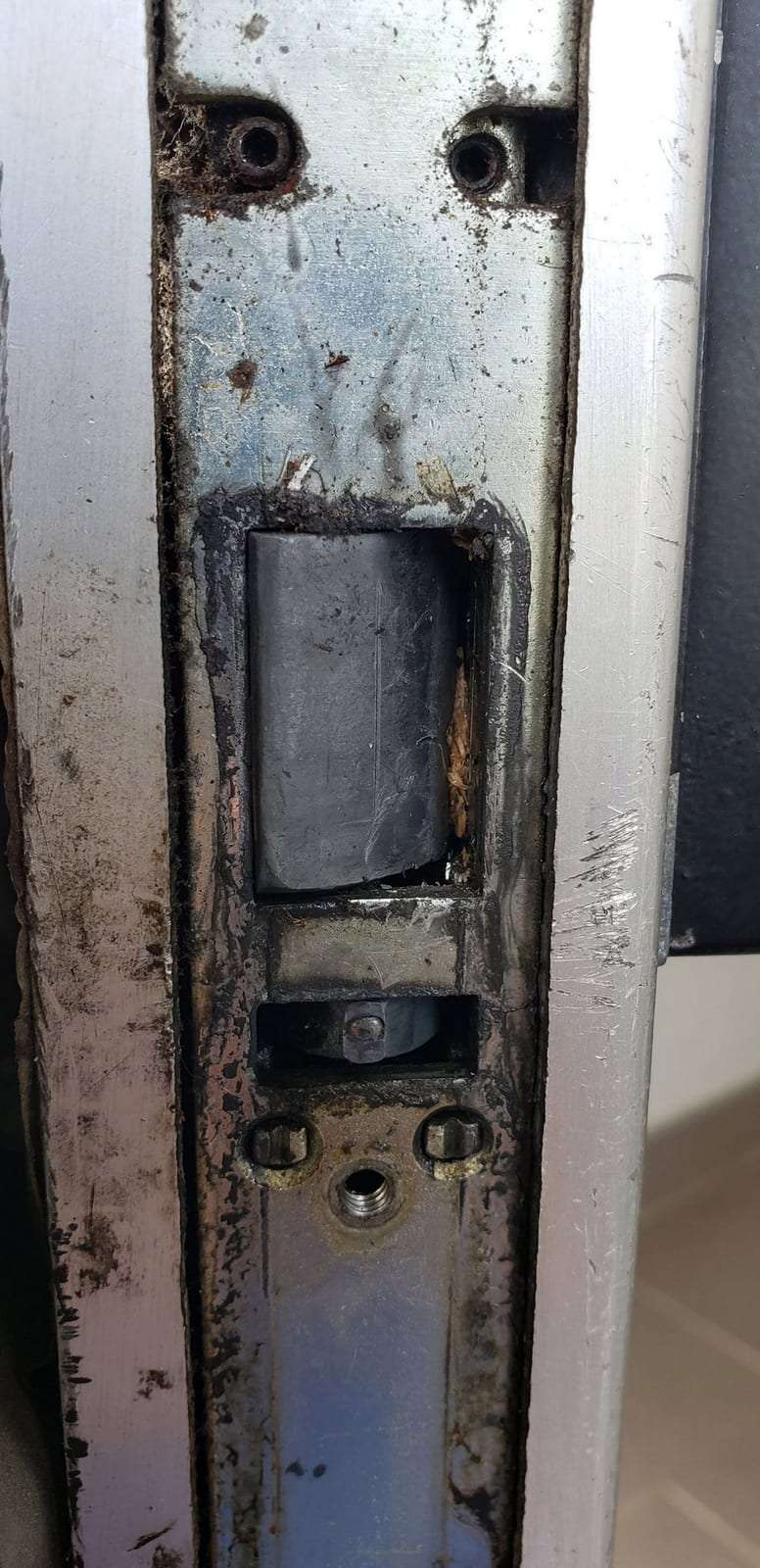
Dirt is behind many sticking locks. Grit works into the keyway, old grease hardens around the pins, and damp starts rust on the springs, until the key drags or the lock refuses to turn. A mortise lock, its works hidden inside the door, can collect years of it before anyone notices.
The repair means taking the lock apart, cleaning it, checking the pins and springs, and reassembling it with a dry lubricant made for locks rather than household oil, which gathers dust. If the key is worn too, a new one cut to the correct depths turns more smoothly than a copy of the worn original.
Worn Door Edges and Forced Entries
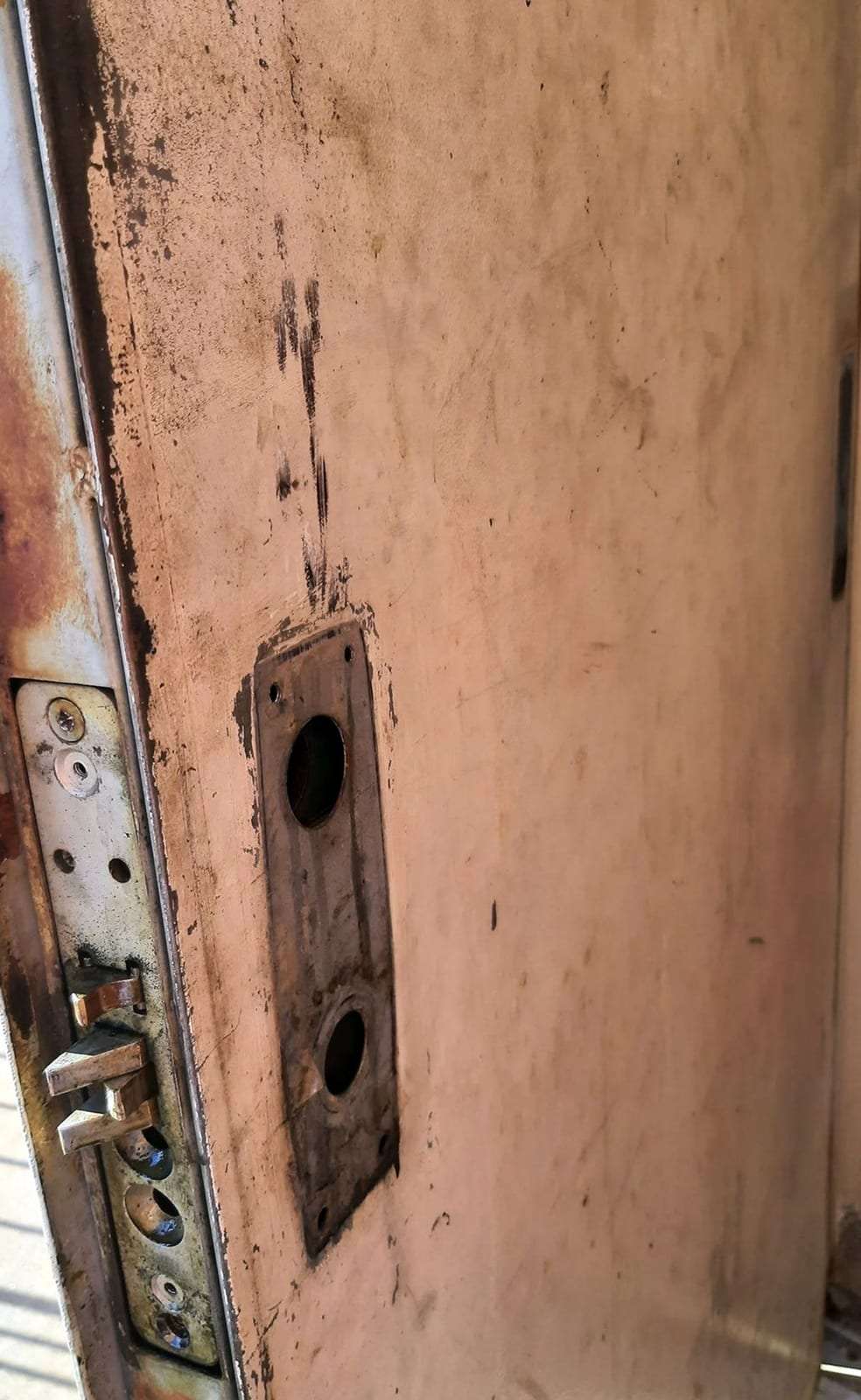
Years of use wear a door down around its lock. Screws loosen in softened wood, the edge splits around an old mortise pocket, and a faceplate rusts until the latch sits loose. A forced entry does similar damage in one blow, splitting the jamb and tearing out the strike.
The door gets repaired before the lock goes back in: split wood glued and clamped or filled, a reinforcing plate wrapped around a damaged edge, and a heavier strike on screws long enough to reach the framing. If the lock body itself is cracked, that part is replaced, and hardware that still works stays.
Does a worn lock always need replacing?
Not always. Wear usually shows first in the cylinder and the key, and a cylinder can often be repinned or swapped while the rest of the lock stays. Replacement makes sense when the body is cracked, parts are no longer made, or the door is getting an upgrade anyway.
Will my old keys still work after a repair?
It depends on the repair. Work on the latch, strike, handle or bolt leaves the cylinder’s pins alone, so the existing keys keep working. If the cylinder is repinned or replaced, new keys come with it and the old ones stop working.
Repair the Lock or Replace It?
Three questions about the lock point to the likely outcome.
Answer the three questions, then press the button.
Before You Request a Repair
A few details let a repair visit start on the right problem.
- Which door it is: front, back, side or basement, a unit door or a shared street door.
- The lock type, if you know it: knob, lever, deadbolt, mortise lock or keypad, and any brand name on it.
- What happens when you turn the key: whether it sticks, spins without catching, or will not turn at all.
- Any visible damage: a bent strike, a split frame, drill marks around the cylinder, or a piece of key still inside.
A key that spins without catching usually means a broken part behind the cylinder; one that will not turn points to the pins or a binding bolt.
Spring move-ins: rekey the locks before unpacking Humid summer air swells doors and sticks latches Autumn deadbolt and latch checks before the cold Frozen lock in winter? Never force the key